
A village built before 1940
Spray Foam Insulation in Bronxville, NY
Under one square mile, almost all of it prewar, and much of it built by an arts colony and a single developer family.
- Free on-site estimates
- Written quote listing material, thickness and R-value for every area
- Air leaks, moisture and old insulation checked before anything is covered
Insulating a Prewar Village
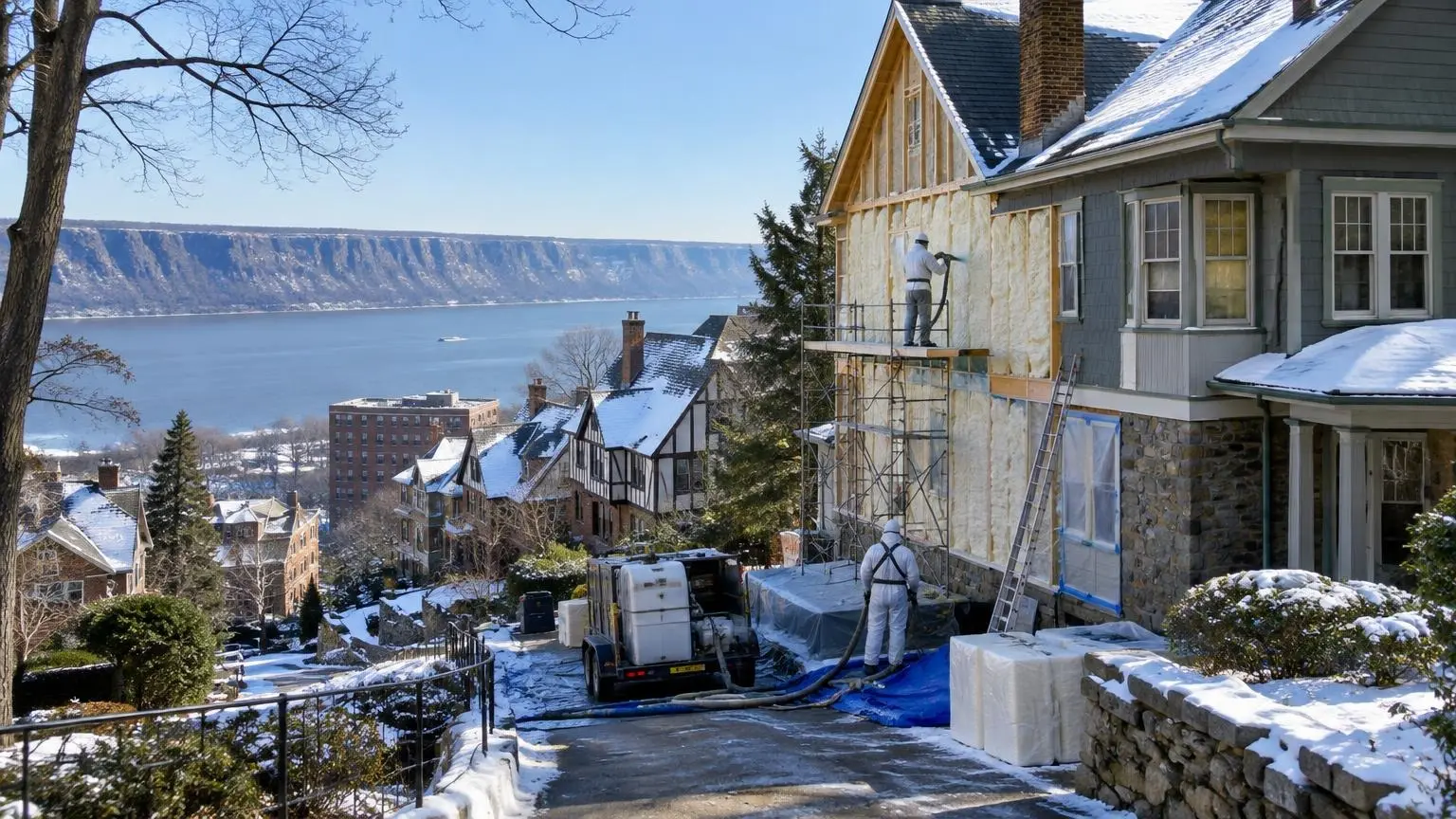
Spray Foam Insulation in Bronxville is mostly about older houses that owners want to keep as they are. The village covers 0.97 square miles, and survey data for 2019 to 2023 puts its median build year at 1938, with about 69.9% of its roughly 2,400 housing units built before 1940. That is one of the oldest housing stocks anywhere in Westchester. About 84% of occupied units are owner-occupied, and those owners tend to be careful about anything that touches plaster, millwork or a slate roof.
How the village was built
Bronxville's character came largely from William Van Duzer Lawrence, who built substantial homes in a rustic setting and shaped the village into an affluent suburb. An early twentieth-century arts colony around Lawrence Park added many distinctive houses designed by both well-known and amateur architects, and the Lawrence family later built apartment buildings and townhouses after the Bronx River Parkway opened in 1925. The result is a mix of large single-family houses on winding hillside lots and solid prewar apartment and townhouse blocks closer to the station.
Respecting the house
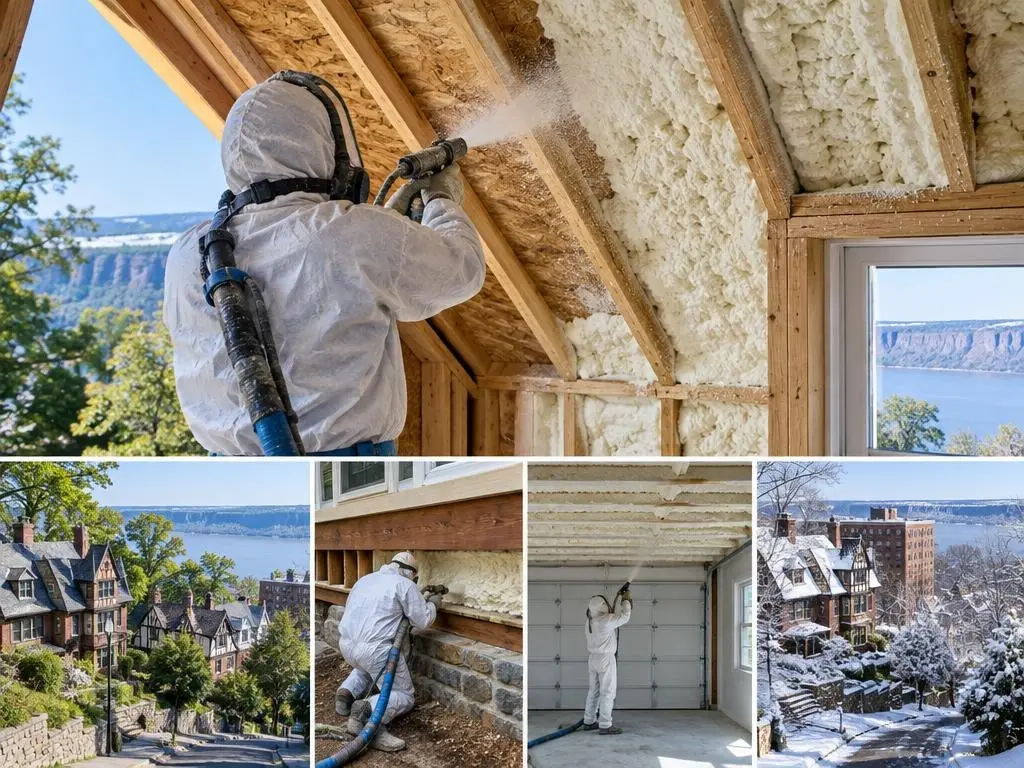
In a house like that, the insulation plan has to work around what makes it valuable. We avoid cutting plaster where we can, and fill closed walls through small holes that are patched afterward, often from the exterior under siding or shingles. In attics, we pay close attention to old chimneys, knob-and-tube wiring and the condition of the roof deck before anything is sealed or sprayed. Slate and tile roofs often mean the attic stays vented and the insulation goes on the floor rather than the roof line.
Third floors and stair halls
Many Bronxville houses have finished third floors with kneewalls and sloped ceilings, plus open stair halls that act like chimneys from the first floor to the roof. Sealing the attic floor and the kneewall spaces cuts that stack effect, which is often the reason the top floor overheats in summer and the entry hall feels cold in winter.
Stucco, stone and shingle
Many Bronxville houses have stucco, stone or brick on the outside, which changes how walls can be insulated. Frame walls under shingles or clapboard can usually be dense-packed from outside with small patched holes. Stucco and masonry walls often have to be filled from inside, or left alone if the plaster is valuable and the attic and basement deliver most of the savings. We tell you plainly which walls are worth doing and which are not.
Rules to check
The state energy code applies, with Westchester in Climate Zone 4. The village includes the Lawrence Park Historic District, so if your work touches the exterior, check with the village about any review before we drill through siding.
What to Know in Bronxville
- Very old housing. Survey data for 2019 to 2023 gives Bronxville a median build year of 1938, with about 69.9% of its roughly 2,440 housing units built before 1940.
- Owner-occupied. About 84.2% of occupied units are owner-occupied (2019 to 2023 estimates); the median owner-occupied home value is listed at $1,137,700.
- Small footprint. The village covers 0.97 square miles of land within the town of Eastchester and counted 6,656 residents in 2020.
- Historic district. The Lawrence Park Historic District preserves the neighborhood linked to developer William Van Duzer Lawrence and the early twentieth-century arts colony.
Bronxville Questions
Can you insulate a historic Bronxville house without damaging it?
Usually. Closed walls are filled through small holes that are patched, attics are worked from inside, and we plan around plaster, millwork and old roofs. Anything that touches the exterior should be checked with the village first.
Should I spray foam the roof of a slate-roofed house?
Often not. Slate and tile roofs usually do best with a vented attic and insulation on the attic floor. We look at the roof and the attic use before recommending foam on the roof deck.
Is wall insulation worth it in a Bronxville house?
In frame walls, often yes. In stucco or masonry walls with valuable plaster, the attic, kneewalls and rim joist usually give more comfort for the money. We assess each wall type during the visit.
Do you work in the Bronxville apartment buildings?
We work where the owner controls the space, such as townhouses and single-family homes. Co-op and condo buildings usually need board approval for anything in shared areas.
Free Estimates in Bronxville, NY
Bronxville homes: free on-site estimates.
Spray Foam Insulation Near Bronxville
- Spray Foam Insulation in Yonkers, NY
- Spray Foam Insulation in Mount Vernon, NY
- Spray Foam Insulation in New Rochelle, NY
- Spray Foam Insulation in White Plains, NY
- Spray Foam Insulation in Scarsdale, NY
- Spray Foam Insulation in Eastchester, NY
- Spray Foam Insulation in Tuckahoe, NY
- Spray Foam Insulation in Pelham, NY
- Spray Foam Insulation in Larchmont, NY
- Spray Foam Insulation in Hastings-on-Hudson, NY
- Spray Foam Insulation in Dobbs Ferry, NY
- Spray Foam Insulation in Ardsley, NY
- Spray Foam Insulation in Irvington, NY
- Spray Foam Insulation in Tarrytown, NY
- Spray Foam Insulation in Mamaroneck, NY