
Plaster stays where it is
Wall Insulation for Prewar Homes in Yonkers, NY
Most houses built before 1940 have hollow exterior walls. They can be filled without a gut renovation.
- Free on-site estimates
- Written quote listing material, thickness and R-value for every area
- Air leaks, moisture and old insulation checked before anything is covered
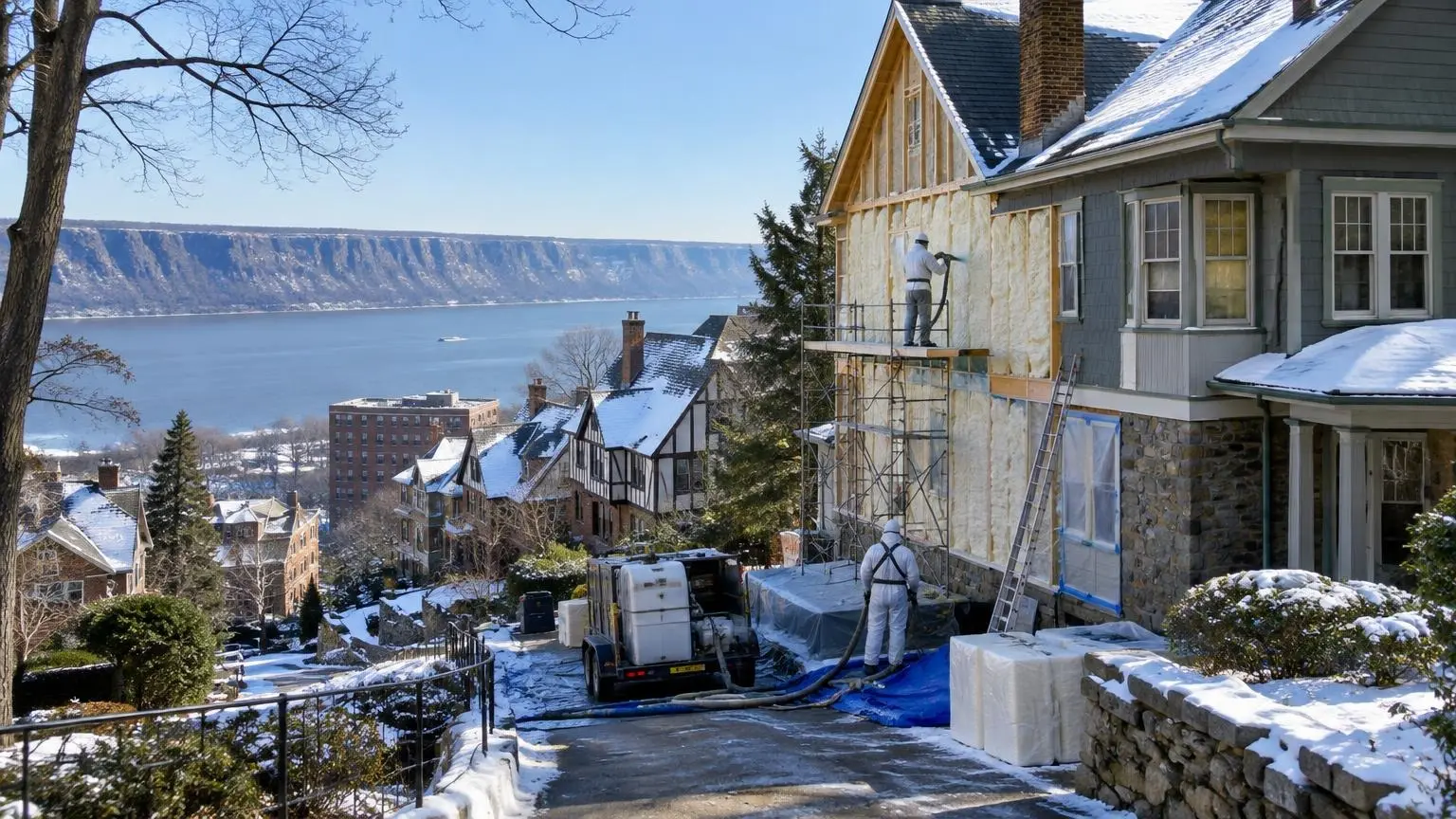
Empty Walls Behind the Plaster
Wall insulation for prewar homes matters in southern Westchester because so many of them are still standing. Census survey figures put the share of housing built before 1940 at about 70% in Bronxville, 59% in the village of Pelham, 48% in Scarsdale and roughly 27% in Yonkers. Houses from that era were usually built with empty exterior wall cavities, and many with balloon framing, where stud bays run uninterrupted from the basement to the attic. Those bays act like chimneys, carrying cold air up through the walls all winter.
Filling closed walls
For walls with intact plaster or drywall, we drill small holes in each stud bay, from outside under siding or from inside, and blow in cellulose at high density. Dense-pack cellulose fills the cavity tightly enough to slow air movement as well as heat, and HomeGuide puts it at $1.60 to $4.20 per square foot. Holes are plugged and patched afterward. Injection foams are another option in some walls. Before drilling we check for blocking, old wiring and any existing insulation so we know each bay fills completely.
Walls that are already open
When a kitchen, bath or addition has the studs exposed, spray foam is the strongest choice. Open-cell fills the bay and seals around boxes and wires; closed-cell adds more R-value per inch in shallow 2x4 walls. The insulation summary of the 2025 state code lists R-30, or R-20 plus R-5 continuous, or R-13 plus R-10 continuous for wood-frame walls in new work, so ask your building department what applies to your renovation permit.
Brick, stone and moisture
Solid masonry walls and brick veneer need more care. Old brick dries to both sides, and insulating the inside can change how wet the masonry stays through freeze and thaw. We look at the wall, the mortar and the gutters before recommending anything for masonry, and sometimes the right answer is to focus on the attic and basement instead.
Balloon framing
In a balloon-framed house, the first step is often blocking the tops and bottoms of the stud bays from the attic and basement. That alone cuts a lot of air movement and is part of every wall job we do in those houses.
What This Covers
Options for closed walls, open walls and older framing.
Dense-pack cellulose
Blown into closed stud bays through small holes, then patched.
Injection foam
A low-expansion foam pumped into closed cavities where it suits the wall.
Open-wall spray foam
Open-cell or closed-cell foam in exposed studs during renovation or additions.
Balloon-frame blocking
Sealing the tops and bottoms of open stud bays at the attic and basement.
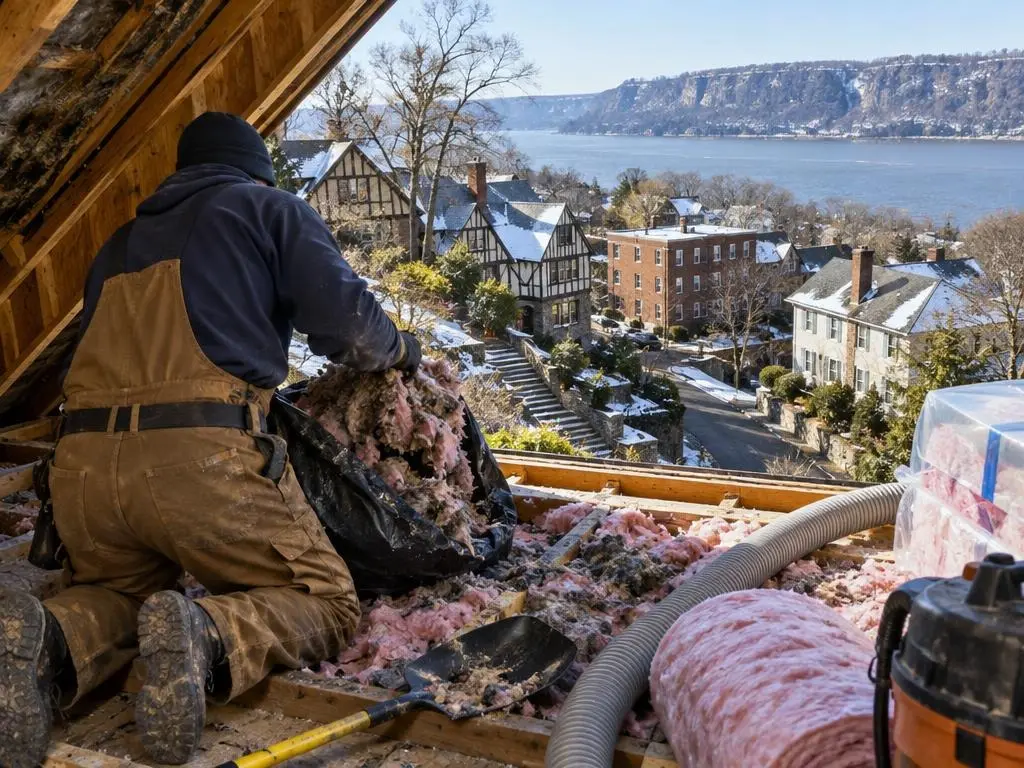
Published Wall Insulation Costs
| Job | Range and source |
|---|---|
| Spray foam, existing walls | $3.15 to $7.50 per sq ft (Fixr) |
| Spray foam, new construction walls | $2.75 to $6.50 per sq ft (Fixr) |
| All exterior walls, spray foam | $4,000 to $10,000 (HomeGuide) |
| Blown-in, exterior walls | $1,900 to $7,800, $1.10 to $3.70 per sq ft (HomeGuide); $2,000 to $4,000 (Fixr) |
| Dense-pack cellulose | $1.60 to $4.20 per sq ft (HomeGuide) |
Figures from HomeGuide (2026 spray foam guide, November 2025 blown-in guide) and Fixr (2025 spray foam and August 2025 blown-in guides). Wall height, siding, plaster repair, blocking and access set the real cost, and your written estimate is the price.
How It Works
1. Survey the walls
We check framing type, existing fill, wiring and blocking with test holes and an inspection camera where needed.
2. Pick the method
Dense-pack, injection foam or open-wall foam, wall by wall, on a written quote.
3. Drill and fill
Each bay is filled to density, and attic and basement ends are blocked in balloon frames.
4. Patch and check
Holes are plugged and patched, and we spot-check bays for full coverage.
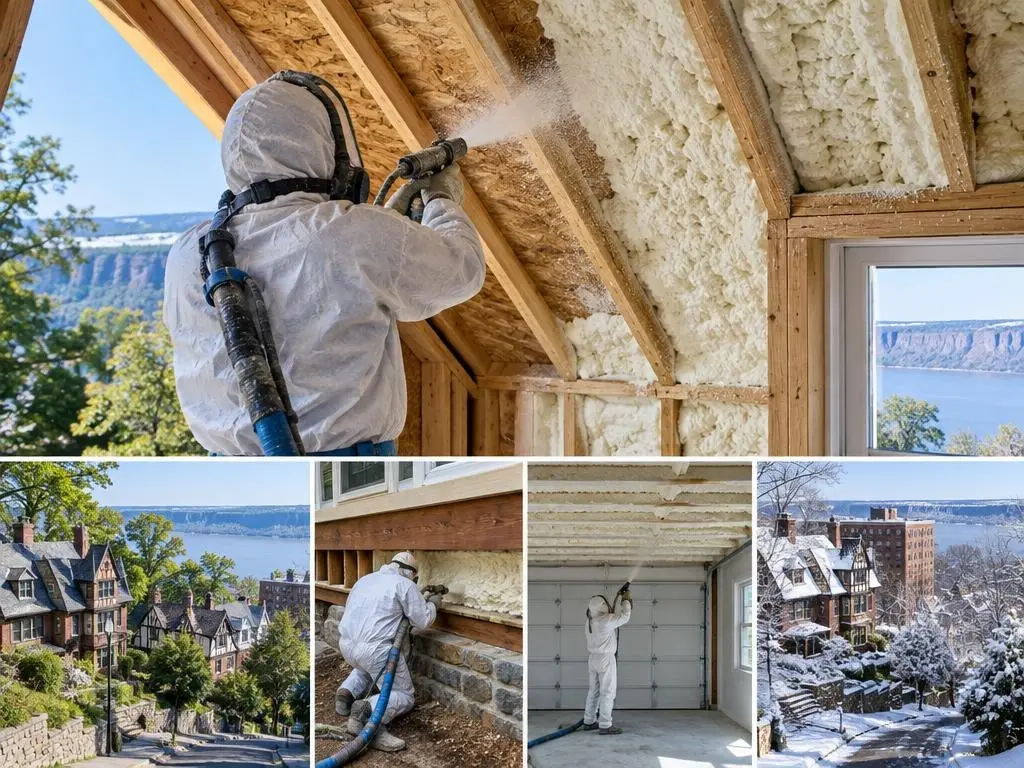
Why Choose Us for Wall Insulation for Prewar Homes
No gut renovation needed
Most closed walls are filled through small holes.
Masonry handled carefully
We look at drying and moisture before insulating brick or stone.
Old wiring checked
Live knob-and-tube gets flagged before anything is filled.
Wall Insulation for Prewar Homes Questions
Can you add insulation to plaster walls?
Yes. Dense-pack cellulose or injection foam goes in through small holes in each stud bay, from outside or inside, and the holes are patched. The plaster stays in place.
Is spray foam possible in a closed wall?
Standard spray foam needs open cavities. Closed walls use dense-pack cellulose or a low-expansion injection foam instead.
What about knob-and-tube wiring?
Live knob-and-tube wiring should be evaluated by an electrician before walls are filled. We check for it during the survey.
Will insulating walls make my old house too tight?
Wall insulation alone rarely makes an old house tight. If we also do heavy air sealing, we talk about ventilation and combustion appliance safety as part of the plan.
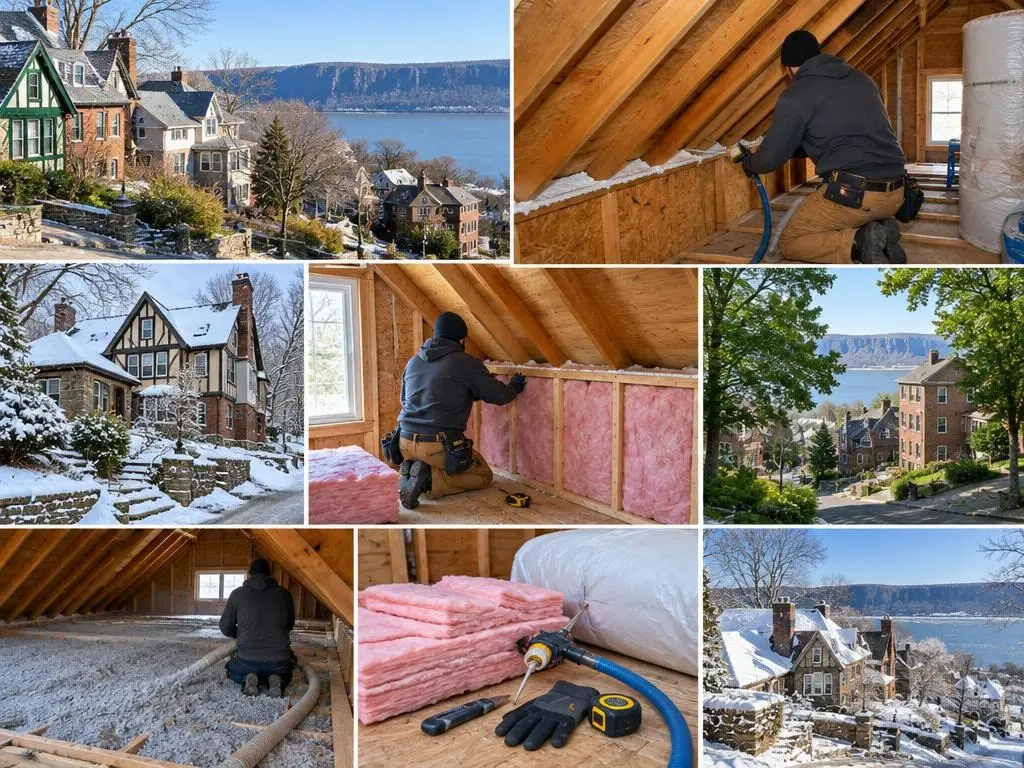
Wall Insulation for Prewar Homes Service Areas
- Spray Foam Insulation in Yonkers, NY
- Spray Foam Insulation in Mount Vernon, NY
- Spray Foam Insulation in New Rochelle, NY
- Spray Foam Insulation in White Plains, NY
- Spray Foam Insulation in Bronxville, NY
- Spray Foam Insulation in Scarsdale, NY
- Spray Foam Insulation in Eastchester, NY
- Spray Foam Insulation in Tuckahoe, NY
- Spray Foam Insulation in Pelham, NY
- Spray Foam Insulation in Larchmont, NY
- Spray Foam Insulation in Hastings-on-Hudson, NY
- Spray Foam Insulation in Dobbs Ferry, NY
- Spray Foam Insulation in Ardsley, NY
- Spray Foam Insulation in Irvington, NY
- Spray Foam Insulation in Tarrytown, NY
- Spray Foam Insulation in Mamaroneck, NY
Get a Wall Insulation for Prewar Homes Estimate
Find out what is in your walls and what it takes to fill them.